


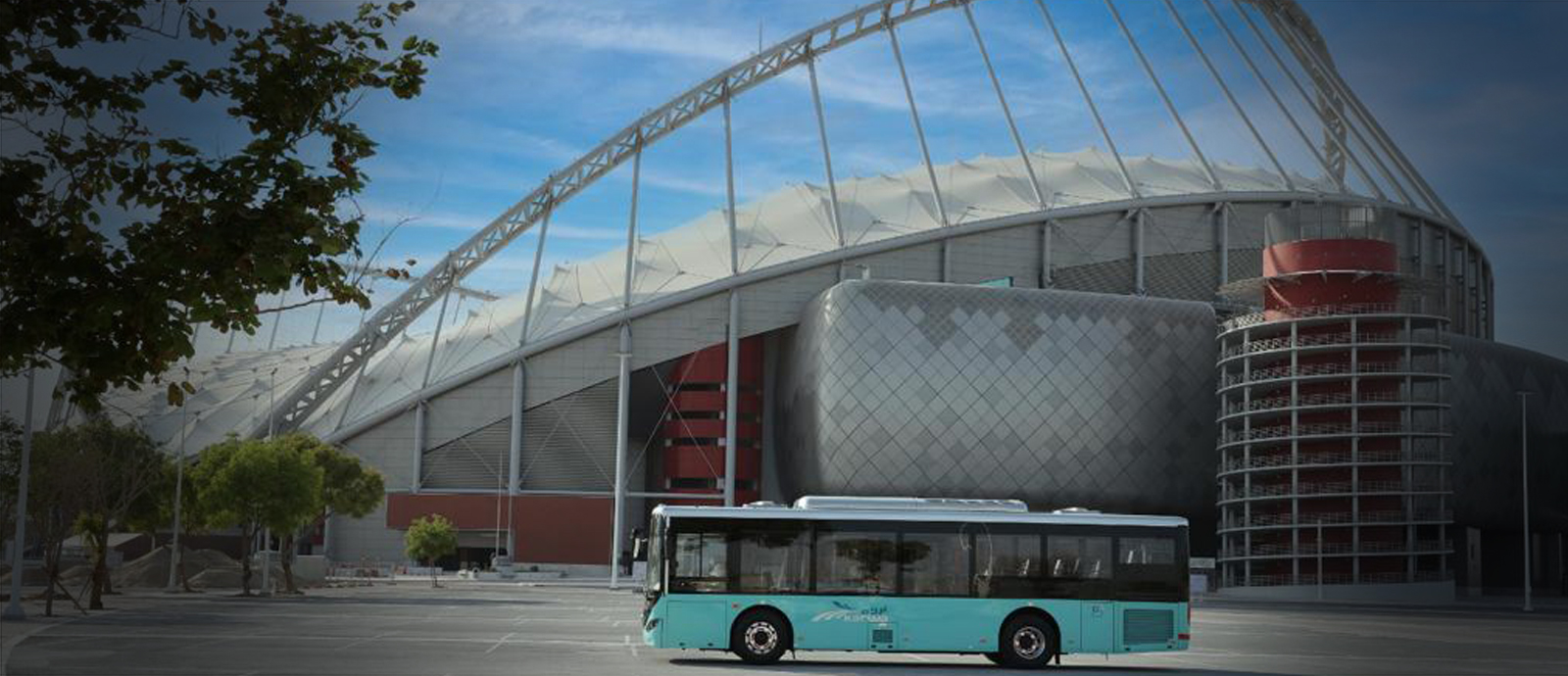
Doha, 22 April 2021 - Qatar will provide safe, reliable and accessible transportation solutions during the FIFA World Cup 2022™. In addition, the country has implemented a host of sustainable projects which will reduce the environmental impact and provide numerous legacy benefits.
To mark Earth Day 2021, the Supreme Committee for Delivery & Legacy (SC) highlights the projects which will help reduce the country’s carbon footprint and achieve its goal of staging the first carbon-neutral World Cup.
Compact tournament
Along with hosting the first World Cup in the Middle East and Arab world, Qatar will stage the most compact edition of the tournament in modern history. Sixty-four matches over 28 days will take place in close proximity, with the maximum travel distance between stadiums just 75km. One of the major environmental benefits of Qatar 2022 is the elimination of domestic flights during the tournament.
“Using our environmentally-friendly transportation systems, such as the Doha Metro, light rail trams and fuel-efficient buses, will greatly reduce overall carbon emissions,” said Thani Al Zarraa, the SC’s Mobility Director. “And due to Qatar 2022 being a compact tournament, fans arriving in 2022 will only have one return plane journey, which will significantly reduce overall carbon emissions [compared to previous tournaments].”
Hamad International Airport
More than 1 million fans are expected to arrive at Hamad International Airport during the World Cup. The airport is recognised as one of the most sustainable in the region after retaining its Level 3 Airport Carbon Accreditation (ACA). The ACA is the only institutionally-endorsed, global carbon management certification programme for airports worldwide. In addition, the airport recently joined a local campaign called Tarsheed which led to increasing the air conditioning temperature by 1C during the winter period – an initiative which reduced carbon emissions by approximately 1,000 tons. Run by the Qatar General Electricity & Water Corporation (KAHRAMAA), Tarsheed promotes the efficient use of water and electricity in Qatar.
Public transport
Mass public transport will help fans get around during the World Cup. The new Doha Metro, in addition to tram and bus services, will help fans travel seamlessly between hotels, stadiums and tourist attractions. The metro will be the transportation backbone of Qatar 2022. It directly connects the airport with five Qatar 2022 stadiums, with the remaining tournament venues reachable via a combination of metro and bus services. The metro system is efficient, electric and utilises regenerative braking systems which help to reduce the carbon footprint. In addition, all the metro stations are designed and operated under green building certification – ensuring their green credentials.
The metro is supported by tram systems in the vicinity of two tournament venues: Lusail Stadium, which will host ten matches during the tournament, including the final, and Education City, which will host matches up to the quarter-finals stage. These rapid transit systems support Qatar’s sustainability goals and ensure both Lusail and Education City are connected and accessible, while offering a transport option that reduces vehicle use and associated emissions.
Fuel-efficient buses
A fleet of new buses are also boosting Qatar’s public transport infrastructure. About 2

